There are always defining moments in our past that if we remember them they make us smile. I think this also goes for any picture that reminds us of something significant in the past. With that said-
take a look at these 14 pictures and hopefully you will smile your way through this post as you take a glance at some of histories most defining moments.
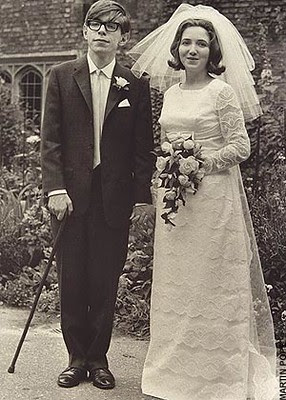
1. Stephen Hawking with his bride, Jane Wilde, 1965.
2. Steve Jobs and Bill Gates, 1991.
3. Charlie Chaplin and Albert Einstein, 1931.
4. Arnold Schwarzenegger in New York for the first time, 1968
Whether you believe it or not there are some facts about our favorite and popular foods that we didn’t even know. So check out these 11 things and get ready to be blown away.
1. The powder that you find on your chewing gum is finely-ground marble.
They would do this to keep it from sticking to the paper/foil wrapper. The powder also ensured that the gum would not react to any moisture.
2. Nobody knows whether or not the white shark in the shark bites are supposed to taste like one of the other flavors each time or have its very own flavor.
Lemon flavor is actually Strawberry
Most people believe that they are supposed to have their own flavor but that is just mere speculation. Also the yellow shark is not flavored the expected lemon but rather is flavored as strawberry.
3. Totino’s Pizza produces 1.4 million party pizza treats every single day.
The people in America as a whole eat around 350 pieces of pizza every single second. That’s about 100 acres of pizza every day!
4. The coating that we find on shiny candies like Skittles is made from excretions of an Asian beetle.
Confectioner’s glaze is actually a common ingredient in several hard shell candies and is additionally a similar ingredient as shellac. Shellac is really a chemical secreted by female beetles to make sheltering tunnels as they move along the surface of trees. It’s extracted by scraping bark, bugs and tunnels off of trees in Asian forests.
5. The correct name for the Lucky Charms Marshmallows is Marbits.
Marbits were first created by John Holahan in 1963.
6. Chocolate Chip Cookies invented by total accident.
While experimenting with ingredients in 1930 at her lodge in Massachusetts, Ruth Wakefield added cut pieces of a bittersweet chocolate bar to her Butter Drop Do cookie dough, expecting the chunks to soften. however the chocolate only softened and held its form. The cookies ended up being super delicious that they had to be done again and again. She revealed the recipes in many newspapers and they became an enormous hit.
7. Hot chocolate was originally meant to be “Hot” or spicy chocolate.
The Aztecs were the very first people to enjoy chocolate as a drink. They also mixed it with hot chili peppers to make it really spicy.
8. Popcorn comes in 2 basic shapes.
Snowflake and Mushroom. Snowflake popcorn is larger and pops much better too, that’s why it’s utilized in movie theaters and ballparks.
9. Nobody knows who invented donuts or when they were invented.
Although the particular history of the doughnut is widely controversial, there are two common stories of how this confectionery treat came to be. One theory suggests they were introduced into North America by Dutch settlers, whereas another credits Hansen Gregory as the creator. Hansen, who was sixteen at the time, claimed to have created it in 1847 once he was discontent with the fat of doughnuts twisted into various shapes.
10. A kid at only 11-years-old was the inventor of the famous Ice Pop and even kept it a secret for 18 years!
In 1905, Frank Epperson combined soda water powder and water and left it on his front porch. The temperature plummeted to a record low that night and therefore the next morning, he awoke to find his drink had changed into a stick of frozen soda water. Eighteen years later, he remembered what he’d done and began manufacturing them in seven totally different flavors
11. It takes an entire week to make a jelly bean.
The process as a whole is fairly involved and needs the beans to sit for a minimum of a day or two in between every step. Apart from the actual production, the sorting method can even be time consuming, since only the beans with the foremost desired sizes and colors can truly make it to the store.
The story of humanity is our journey of understanding the world that we live in. Even today, historians and scientists work towards answering questions related to the universe and the past of humanity.
Here are 10 stories of success that have explained previously unsolved mysteries.
1. The Lost Franklin Expedition Ship
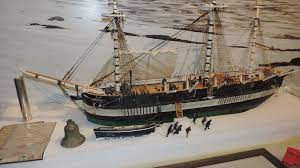
British explorer Sir John Franklin set off towards the Canadian Artic to search for the Northwest Passage in 1845. This voyage was well funded and equipped, and attracted a lot of attention from the media. However, after entering the Artic, it was never heard from again. 2 ships with 129 men simply disappeared.
Over the years, there have been a few clues to explain the fate of this expedition. In 1959, a rescue mission found 2 notes under a rock on King William Island. The first note explained how the ship got trapped in ice and so the crew decided to spend the winter on the island. The second note happened to be scribbled on the margins of the first note informed us that the ship had been trapped for over a year and the crew was displaying a high rate of mortality. Franklin was dead and whoever survived planned on walking south to safety. However, they did not make it. Bones found by Inuit hunters displayed marks of metal saws throwing light on the fact that the men were eating each other.
In 1880 when the area came under Canadian control, London stopped all attempts at their search operations. However, the Canadian’s still tried to find the missing ships. In 2014, Prime Minister Stephen Harper announced the discovery of one of the ships by an underwater vehicle belonging to Parks Canada. They believe this wreck will throw light on the fate of the expedition and the high death rate of Franklin and his crew. The other ship still hasn’t been found, but there is no doubt it will be found in the recent future.
2. Egypt’s Strangely Small War Elephants
The Pharaoh Ptolemy IV of Egypt declared war against the Seleucid ruler Antiochus III in 217 B.C. The armies met at the Battle of Raphia (not Gaza) in July that year. War elephants were the deadly weapon used by both sides. The famous Greek historian Polybius described how the elephants locked tusks and ran at each other in this fight. According to this account of the fight, only a few of Ptolemy’s elephants were actually a part of this battle. They started to panic at the sight of Antiochus’s larger Indian elephants.
This detail left several historians confused since African elephants are actually a lot larger than the Asian ones. There were several explanations that came up including the most widely accepted idea – Ptolemy was not able to get savanna elephants and hence was forced to use the smaller African forest elephants. However, further research in Eritrea (the source of Egypt’s elephants) has finally solved the mystery.
Eritrean elephants are close to extinction today. However, studying their population has thrown light on the fact that they are savanna elephants andare in fact much larger than the Indian elephants. Polybius was not present at the battle and hence would have heard legends about the size of wildlife in India which made him come to the conclusion that Antiochus’s elephants managed to scare off the African elephants. However, in reality, though the African elephants might have been larger in size they are extremely skittish and difficult to keep under control. This didn’t matter much since Ptolemy won the battle anyway.
3. The Dark Side Of The Moon
The first pictures of the dark side of the moon were taken in 1959 by the Soviet spacecraft Luna 3. However, to the surprise of everyone, the unseen surface of the Moon contained almost none of the dark areas that are known as lunar maria that take over a large part of the familiar side of the Moon. Only 2% of the dark side of the Moon was made up of lunar maria.
Maris is large basaltic plains that are formed due to volcanic activity. It was concluded that a thicker crust could have prevented this from happening on the dark side. However, the mystery as to why the other side is darker still remained unanswered for over 50 years until Jason Wright – an astrophysicist claimed to have cracked the case.
A theory exists which states the Moon was formed from the debris that scattered when there was a collision between the Earth and a large object the size of Mars. This collision would have generated a large amount of heat and since the Moon is so much smaller than the Earth, the Moon cooled off faster. However, the side of the Moon that faces the Earth still continued to get heat from the molten planet. The faster cooling on the dark side of the moon could have created this thicker crust.
4. The Mysterious Notes In A Copy Of Homer’s ‘Odyssey’
Scientists were left puzzled over notes found in an ancient copy of Homer’s “Odyssey” for over 150 years. There were handwritten text all over the margins of this 500-year-old book. However, they had not been able to decode the text and understand what exactly it said. However, a collector M.C Lang offered a $1,000 reward to anyone who could decode the text.
The prize was finally won by 2 Italians – Daniele Metilli and Guila Accetta who found these notes were made in a shorthand form which was invented by Jean Coulon de Thevenot in the 18th century. Once they decoded the text, they discovered it was in French and was actually a translation of the “Odyssey”.
This discovery took a great deal of work on the parts of Metilli and Accetta who researched several defunct stenographic systems until they found something that resembled the annotations. They said they could never have been able to do it without the resources of the Internet.
5. The Ocean Quack
Around 50 years ago, sounds were detected by submarines through the Southern Ocean. These sounds resembled those of a duck quacking however that was impossible since ducks don’t venture into the middle of the sea.
Several other reports came up over the years that reported the same quacking sounds. Some theories said these sounds were caused by ships, others put it on shoals of fish. The only concrete thing about these sounds was the fact that they were reported in the Southern Ocean only during winter and spring.
Researchers finally discovered the source of this sound only earlier this year. They were reported to come from Antarctic minke whales. This came about when acoustic recorders were attached to a pair of minke whales which resulted in a close-up recording of this “quack”.
This discovery will now help scientists study the migration times and patterns of these whales by monitoring the “quack” and will be facilitated by a permanent acoustic recording station in Antarctica.
6. The Last Resting Place of U-26
Shortly after the start of World War I in 1914, Lieutenant Commander Egewolf von Berckheim was appointed the captain of a newly built German submarine U-26. His skills and effective captaincy helped him sink 4 enemy ships including the Russian Pallada.
In 1915, the submarined disappeared in the Baltic sea taking with it 30 of the crew members. There have been several theories over the years that explained this disappearance. Some claimed it was destroyed by a mine while others said there was something wrong with the engine. However, no wreck could be found.
In 2014, the U-26 remains were finally found in the western Gulf of Finland. This area was heavily mined by the Russians during the war in order to keep the Germans away. It is believed that this minefield is what destroyed the U-26.
Ironically enough, the remains of Pallada were also found along with the U-26. Coincidentally, these remains were found almost exactly 100 years after the commissions of the first submarine in 1914.
During the expansion of the Pan-American Highway 4 years ago, a large “whale graveyard” was discovered in the Atacama Desert. Under layers of rock lay huge fossils which mystified palaeontologists regarding why so many species (nearly 40) of animals met their doom in the same place. The roadwork was then put to a temporary stop in order to allow further investigation.
3D imaging experts from the Smithsonian came up with a possible answer. Their investigation showed the death of these marine mammals happened at 4 different times over a period of 20,000 years, before they were washed out to the tidal flat and covered with layers of sand. It is believed that the cause of death of these whales was toxic algal blooms which still happen in Chilean waters. Some of these fossils also show small apatite grains which are likely the remains of the deadly algae.
8. The Lost son
In 1942, four airmen vanished on board an Avro Anson plan soon after taking off from the airfield in Patricia Bay, British Columbia. There were extensive searches carried out by the Canadian military but no trace of the plane was found.
In 2013, a group of workers from a logging company happened to come across the remains of the plane and the four airmen while working on Vancouver Island. Unfavourable conditions led to the remains being collected and identified only in May 2014. The four men were then buried at a Commonwealth war cemetery.
A strange stone head weight 170 kgs was found in Chichester, England two hundred years ago. The origin of this head was unknown until 2013 when laser scanning technology was used and the head was identified to belong to a statue of the Roman Emperor Trajan and dates back to A.D 122. It is one of the most significant relics that has been found from Roman Britain.
Previously, it was thought impossible to identify the origin of the head simply because of its extremely weathered condition. However, modern laser technology helped scientists identify the different facial features and ever the hairstyle which all pointed towards Trajan.
It is believed that the statue was erected to greet visitors as they entered Chichester’s harbour – the gateway to England. There is a similar statue on display at the Ostia Harbour in Rome.
10. The Location Of The Santa Maria
In 1984, history was made when underwater archaeologist Barry Clifford discovered the wreck of Whydah – the only fully confirmed pirate shipwreck. However, in 2014 Clifford has claimed to have found the wreck of the Santa Maria – Columbus’s flagship that sunk on Christmas Eve 1492.
During his research in Haiti, Clifford pinpointed the location of a fort that Columbus built after the wreck of the Santa Maria. Using this location and the content in Columbus’s diaries he found a likely site of the wreck. To his surprise, Clifford discovered he had photographed this wreck with his team years ago! Several dives organised in 2014 confirmed the size of the ship was the same as that of the Santa Maria and they even found a cannon consistent with the guns that were reported to have been carried by Columbus. This happens to be one of the most amazing archeological finds in recent history.
In older days, people were not as kind to those who were patients in an insane asylum and they were often tortured or mistreated. People believed that the insane were mostly a burden that needed to be dealt with instead of a person who simply lives a different sort of live which requires kind accommodations.
Take a look at these techniques used to keep these patients under control. They were often painful and cruel.
1. Electroconvulsive Therapy
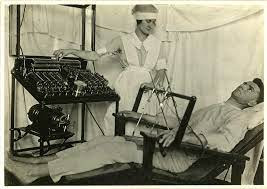
Otherwise known as electroshock, this form of treatment was the process of retraining the mental patient in order to send hundreds of volts of electricity through their brain. Many of the patients suffered from extreme memory loss afterwards.
2. Trepanning
This ancient practice goes as far back as prehistoric times. In this method, holes were drilled into the patients’ skull to release the evil that was believed to be inside of them.
3. Hydrotherapy
In the late 1800’s and early 1900’s, hydrotherapy took place by strapping patients inside a bathtub or alternatively, wrapping them tightly with cloths and then subjecting them to violent jets of water in order to sedate them.
4. Insulin Shock Therapy
Doctor Manfred Sakel created a method of inducing comas in the early 1920’s. Mental patients were injected with insulin in order to cause them to slip into a coma. According to this doctor, they would emerge from their coma cured.
During the first two decades of the 20th century, doctors were removing the connections to and from the prefrontal cortex because they believed that this would cure mental patients.
6. Sterilization
Julius Wagner-Jauregg, an Austrian physician sometimes sterilized patients who engaged in excessive masturbation because he believed that they had developed schizophrenia.
7. Malaria Injections
Patients with Neurosyphilis were injected with Malaria to raise their body temperatures extremely and, in turn, killed the Syphilis virus.
This early 20th-century psychiatrist, Dr. Henry Cotton, believed that mental disorders were caused by bacteria inside of the body. He took to removing entire organs that he believed were infected. Not many people survived this treatment.
It was a dark day in our country’s history on December 7, 1941, when more than 2,000 Americans were killed by a surprise air attack from Japan which ultimately launched WWII. Here are some interesting facts about Pearl Harbor that may be new to you
1. Many of the battleships that were sunk on that day have been resurrected.
Six out of eight battleships have since been repaired and returned to the U.S. Navy’s fleet including two that have sunk completely: The USS West Virginia and the USS California were raised by the Navy repaired and reused. Also, many bullet holes can still be seen at the active military installations in Oahu. They serve as a reminder of the lives that were sacrificed on that day.
2. Veterans of the Pearl Harbor attack may be laid to rest there.
Those who were there and survived the attack have the option to be joined with their comrades that were lost on that day. For example, crew members from the USS Arizona may have their ashes deposited by divers beneath its sunken gun turrets. Approximately 30 survivors of this battleship have chosen this as their final resting place. Options for other survivors include having their ashes scattered wherever their ship was located at the time of the attacks.
3. The USS Arizona has an ongoing fuel leak.
The fuel load for this battleship on the day of the attack was almost 1.5 million gallons! That amount of fuel triggered a massive explosion and many fires that destroyed the ship on the day of the attack. However, even now, some fuel continues to leak from the wreckage, up to 9 quarts of oil a day! Due to this, many visitors say that it is as if the Arizona is still bleeding.
4. During the 2013 government shutdown, service members in Hawaii took control of the memorial site.
When the government was such down for more than two weeks, the memorial was left unattended and that’s when military members stationed there took it upon themselves to take care of the site. They raked, weeded and mowed the overgrown grass, as if to say to all veterans, “We haven’t forgotten about you. We will not forget about you.”
5. Japanese tourists often visit the memorial.
Unlike in the past, Japan is now one of America’s strongest allies and so everyone is welcome to pay their respects at Pearl Harbor and this tourism is a responsible for the state’s economic stability.
6. A baby girl’s remains is still entombed in the sunken USS Utah battleship.
On that fateful day, a crew member brought on board his daughter’s ashes in an urn who died at birth. The urn was stored in his locker because his plan was to scatter her ashes at sea but didn’t get the opportunity to do this. She was later honored with a funeral at the USS Utah Memorial in 2003.
7. A huge oil plume rests beneath the harbor.
This attack created an estimated 5 million gallons of spilled fuel and it has since been collecting beneath Pearl Harbor in a massive plume. It is the size of 20 acres and the Navy states that there is no real threat to the drinking water.